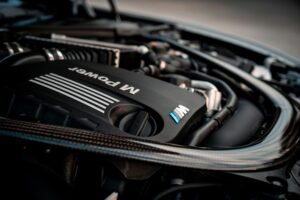
Why You Should Never Put Tap Water in Your Radiator
It’s the shortcut everyone’s tempted by: the coolant’s a little low, there’s a tap right there, so you top it up with water and move on. The problem is that tap water in your radiator isn’t just water — it’s water carrying dissolved minerals and chemicals that quietly attack a cooling system from the inside. On a modern BMW with an aluminium engine and tight coolant passages, that shortcut costs far more than a bottle of distilled water ever would.
Here’s what’s actually in tap water, what it does to your cooling system over time, and what to use instead.
What’s actually in tap water
Drinking water is treated to be safe for people, not for engines. Depending on where you live, it carries a mix of:
- Dissolved minerals — mainly calcium and magnesium (this is what “hard water” means). These are the source of the scale that furs up a kettle, and they’ll do the same thing inside an engine.
- Chlorine and chlorides — added to disinfect the supply. Chlorides are aggressive toward aluminium and promote corrosion.
- Other dissolved solids — iron, silica and various salts that vary by region and bore.
None of that matters in a glass of water. Circulated hot through a sealed metal loop, thousands of times, under pressure — it matters a lot.
What tap water does to your cooling system
Scale and buildup in the coolant passages
When hard water is heated, those calcium and magnesium minerals drop out of solution and deposit as scale — the same chalky crust you see in a kettle. Inside an engine it builds up in the narrowest, hottest spots: the coolant passages in the head, the radiator tubes, the thermostat, the heater core. Scale is an insulator, so even a thin layer reduces how well the system pulls heat out of the engine. Left long enough it restricts flow and creates hot spots.
Corrosion and electrolysis
Coolant isn’t just there to carry heat — it carries corrosion inhibitors that protect the metal. Dilute it with mineral-laden tap water and you weaken that protection while adding chlorides that attack aluminium directly. A modern cooling system also mixes metals (aluminium, steel, brass, solder), and mineral-rich water conducts electricity well enough to drive galvanic and electrolytic corrosion between them — the kind that pinholes a radiator or eats a water pump from the inside.
Knock-on wear
Once buildup and corrosion start, the damage compounds: restricted radiators run hot, debris circulates and wears the water pump seal, the heater core clogs, and the thermostat sticks. What began as “just a quick top-up” turns into parts and labour.
Why performance BMWs are especially unforgiving
The B48/B58 six and the S55/S58 M engines run aluminium heads, compact radiators and tight passages, and they make serious heat under load — especially tuned, and especially in Australian summers. Several of these platforms also use water-to-air charge cooling, so the same coolant loop is helping manage intake temperatures too. Scale and corrosion anywhere in that loop chips away at cooling performance you actually paid to have. A cooling system that’s already working hard has no spare margin to give up to buildup.
What to use instead
It’s simple and cheap:
- Distilled or deionised water — minerals removed, so there’s nothing to deposit or drive corrosion. A few dollars a bottle from the supermarket or auto shop.
- The correct coolant/antifreeze, at the right concentration — it carries the corrosion inhibitors your system relies on and raises the boiling point. Use a coolant suited to your BMW; don’t just run water.
- Pre-mixed coolant if you’d rather not measure — it’s already blended with the right water.
And don’t make an exception for “just this once.” A single tap-water top-up introduces minerals that stay in the system until the next full flush. If you’re ever caught out roadside with no distilled water, get home and do a proper drain-and-fill rather than leaving it in there.
Where this fits with your cooling upgrades
If you’ve spent money making your BMW cool better — a bigger radiator, an upgraded charge cooler — the coolant it circulates is part of that system, not an afterthought. Clean distilled water and the right coolant protect that investment; tap water slowly undoes it. It’s the cheapest cooling “upgrade” there is. If you’re planning cooling work, our B58 billet intercooler manifold and other cooling parts share that same loop — and it’s worth reading up on how heat soak steals power in Australian heat while you’re at it.
FAQ
Can I use tap water in my radiator in an emergency?
Only as a genuine last resort to get home safely, and then flush it out and refill with distilled water and the correct coolant as soon as you can. Even one top-up adds minerals that stay in the system until the next flush.
What’s the difference between distilled and deionised water?
Both have the dissolved minerals removed, which is the part that matters for your cooling system. Either is fine — the point is that there’s nothing left in the water to form scale or drive corrosion. Avoid “spring” or “mineral” water, which is the opposite of what you want.
Do I still need coolant if I use distilled water?
Yes. Distilled water alone has no corrosion inhibitors, a lower boiling point and no freeze protection. Always mix it with the correct coolant/antifreeze for your BMW at the recommended concentration, or use a pre-mixed coolant.
How do I know if tap water has already caused damage?
Signs include rising coolant temperatures, discoloured or gritty coolant, a clogged or lukewarm heater, and corrosion or residue around the radiator and cap. If you suspect buildup, a proper coolant flush is the place to start — and switch to distilled water going forward.
Is bottled or filtered water good enough?
No. Standard bottled drinking water and most household filters still contain dissolved minerals — sometimes deliberately added. Use distilled or deionised water specifically; it’s sold for exactly this purpose.
The takeaway
Tap water is the cheapest thing you can put in your cooling system and the most expensive mistake. Minerals leave scale, chlorides drive corrosion, and both quietly rob your BMW of the cooling it needs — most of all when it’s hot and working hard. Spend the few dollars on distilled water and the right coolant. If you’re upgrading your cooling setup, browse the range or get in touch and we’ll point you the right way.